Crawl Space Water Removal in Lincoln, NE
Water under the house, pumped out, dried and stopped from returning.
The short answer
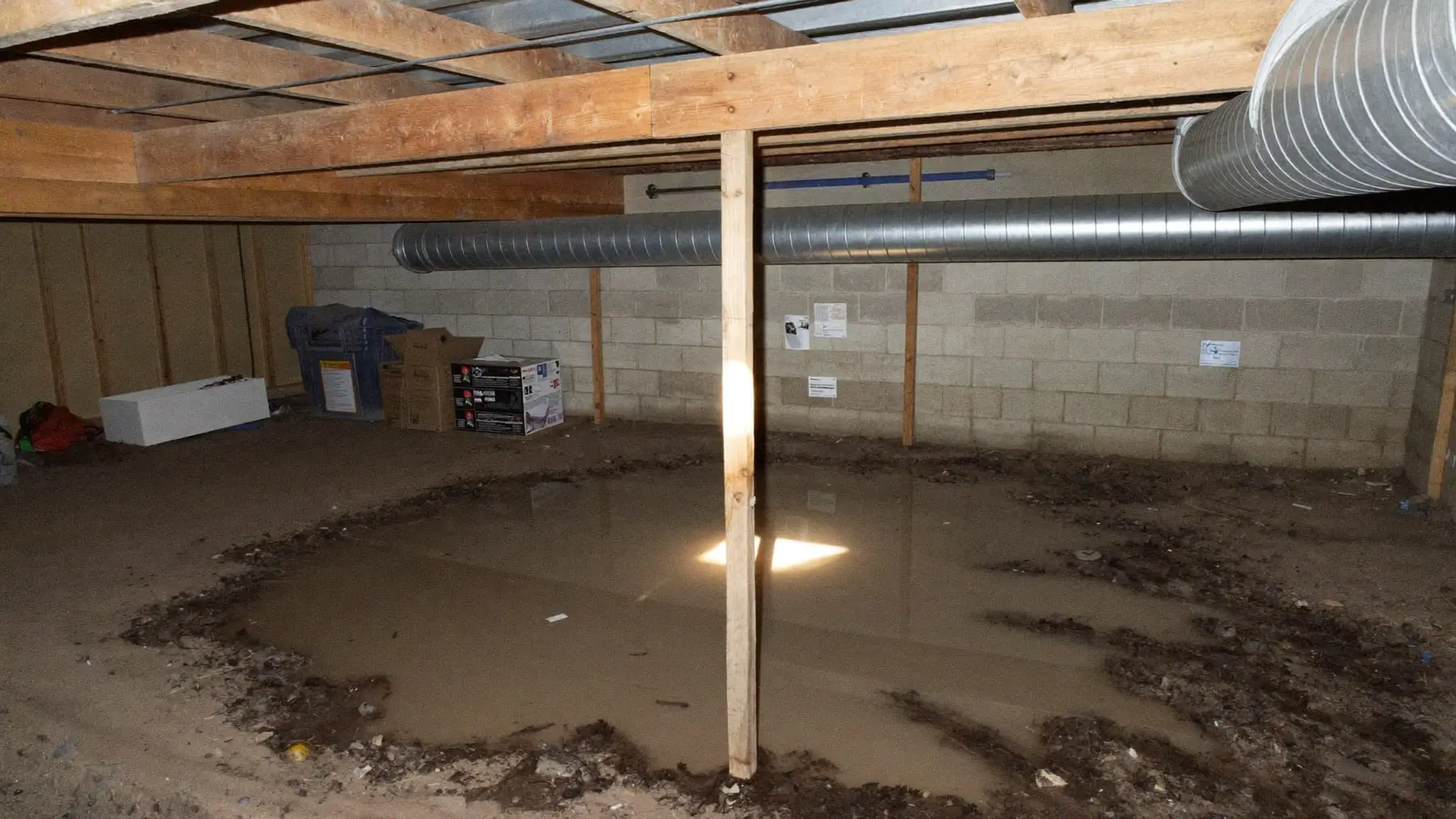
Water in a crawl space rarely announces itself. You notice a musty smell in the hallway, floors that feel soft or cold, or humidity creeping up in the rooms above, and by then the water has usually been sitting for days. Removal means finding and stopping the source, pumping out standing water, taking out soaked insulation that will not dry properly, then drying the framing to a measured standard rather than until it looks dry.
Why Lincoln crawl spaces take on water
Spring storms, slow draining clay soil and freeze and thaw cycles all push water toward foundations here. The most common causes:
- Downspouts dumping water right next to the foundation
- Soil graded toward the house instead of away from it
- A rising water table after days of steady rain
- Burst or leaking supply lines and drain pipes
- A sump pump that failed, lost power or was never installed
- Condensation on cold ducts and pipes during humid summers
Water extraction
The source is found and stopped first. Standing water then comes out with submersible pumps and portable extractors built for tight, low spaces. Soaked insulation and debris are removed, because fiberglass batts that have held water rarely dry properly and can hold mold. Moisture meters and thermal imaging show where water has wicked into joists, sill plates and subfloor, so nothing wet gets sealed up and forgotten.
Sump pumps and drainage
If water keeps coming back, extraction alone will not fix it. The usual repair for repeat flooding is a sump pit at the low point of the crawl space, with a pump and a check valve. Interior perimeter drain tile carries water to the pit, and a battery backup keeps the pump running when storms take the power out. Outside, extending downspouts and regrading soil so it slopes away from the house does a surprising amount.
Encapsulation and vapor barriers
A bare dirt floor releases moisture into the house every day. A vapor barrier is heavy polyethylene sheeting, usually 6 to 20 mil, laid over the soil with taped seams. Full encapsulation goes further: the liner runs up the foundation walls, vents are sealed, and a dehumidifier holds relative humidity below about 60 percent. Not every home needs full encapsulation, and a contractor should explain the options and give you a written estimate before any work starts.
Structural drying
Once standing water is gone, commercial dehumidifiers and air movers are sized to the space. Moisture readings are taken daily until the framing reaches a dry standard, typically around 15 percent moisture content or lower for wood. Most crawl spaces dry in three to five days. Photographs and logged readings through the job are what support an insurance claim later.
Mold prevention
Mold can begin growing on damp wood within 24 to 48 hours. After drying, affected framing is cleaned and treated with an antimicrobial. Where growth is already established the work becomes mold remediation, so it is removed rather than covered. After that, a working sump, an intact vapor barrier and controlled humidity are what keep it from returning.
Signs you need crawl space water removal
Any of these is worth a look under the house.
- Musty or earthy odors inside the house
- Soft, bouncy or cupping floors
- Higher indoor humidity or condensation on windows
- Visible water, mud or a waterline in the crawl space
- Sagging or wet insulation
- An unusual rise in pests, which thrive in damp spaces
Crawl Space Water Removal in Lincoln, NE
One call connects you with a licensed, insured local contractor.
+1 (402) 783-8866Licensed & insured contractors · Lincoln & Lancaster County
Water damage restoration cost calculator
Clean is a supply line, gray is appliance discharge, black is sewage or outside flood water.
- Extraction and drying
- Reconstruction
- Rate used
Not a quote. Published national averages, for orientation only. Actual cost depends on how long the water sat, what materials are involved and your local market. Get a written estimate. How these figures are worked out
Frequently asked questions
How much does crawl space water removal cost in Lincoln?
It depends on how much water there is, what caused it, how much insulation has to come out, and whether a sump pump or encapsulation is added. The cost calculator on this site gives a range based on published national rates, and the contractor gives you a written estimate before starting.
Does homeowners insurance cover crawl space water damage?
Sudden accidental damage such as a burst pipe is often covered. Groundwater seepage and surface flooding usually are not, unless you carry separate flood insurance. Check your own policy. Either way the damage is documented with photographs and moisture readings, which is what a claim is argued from.
How long does the whole job take?
Extraction is usually a few hours. Drying takes three to five days depending on how wet the framing got and the weather outside, and it is finished when the meter readings say so rather than on a fixed schedule.
Can I just run a fan down there?
A fan moves air but does not pull moisture out of wood, and it can spread mold spores around the space. Proper drying needs dehumidifiers and moisture readings to confirm the framing is actually dry rather than dry on the surface.
Part of Water Damage Restoration
Extraction, structural drying and repair after any water intrusion.
- Emergency Water Removal : Round-the-clock extraction while water is still standing.
- Basement Flooding Cleanup : Pump-out, drying, and fixing why it flooded in the first place.
- Burst & Frozen Pipe Damage : Nebraska winters split pipes. Fast response limits the damage.
- Sewage Backup Cleanup : Category 3 water. Genuinely not a do-it-yourself job.
- Storm & Roof Leak Damage : Nebraska weather finds every weakness in a roof.
- Sump Pump Failure : When the pump quits, the pit overflows into the basement.
Available across the Lincoln area
Water damage right now?
Answered 24 hours a day, including weekends and holidays.
+1 (402) 783-8866Licensed & insured contractors · Lincoln & Lancaster County