Fire Damage Restoration in Lincoln, NE
Board-up, soot removal, smoke odor treatment and full reconstruction.
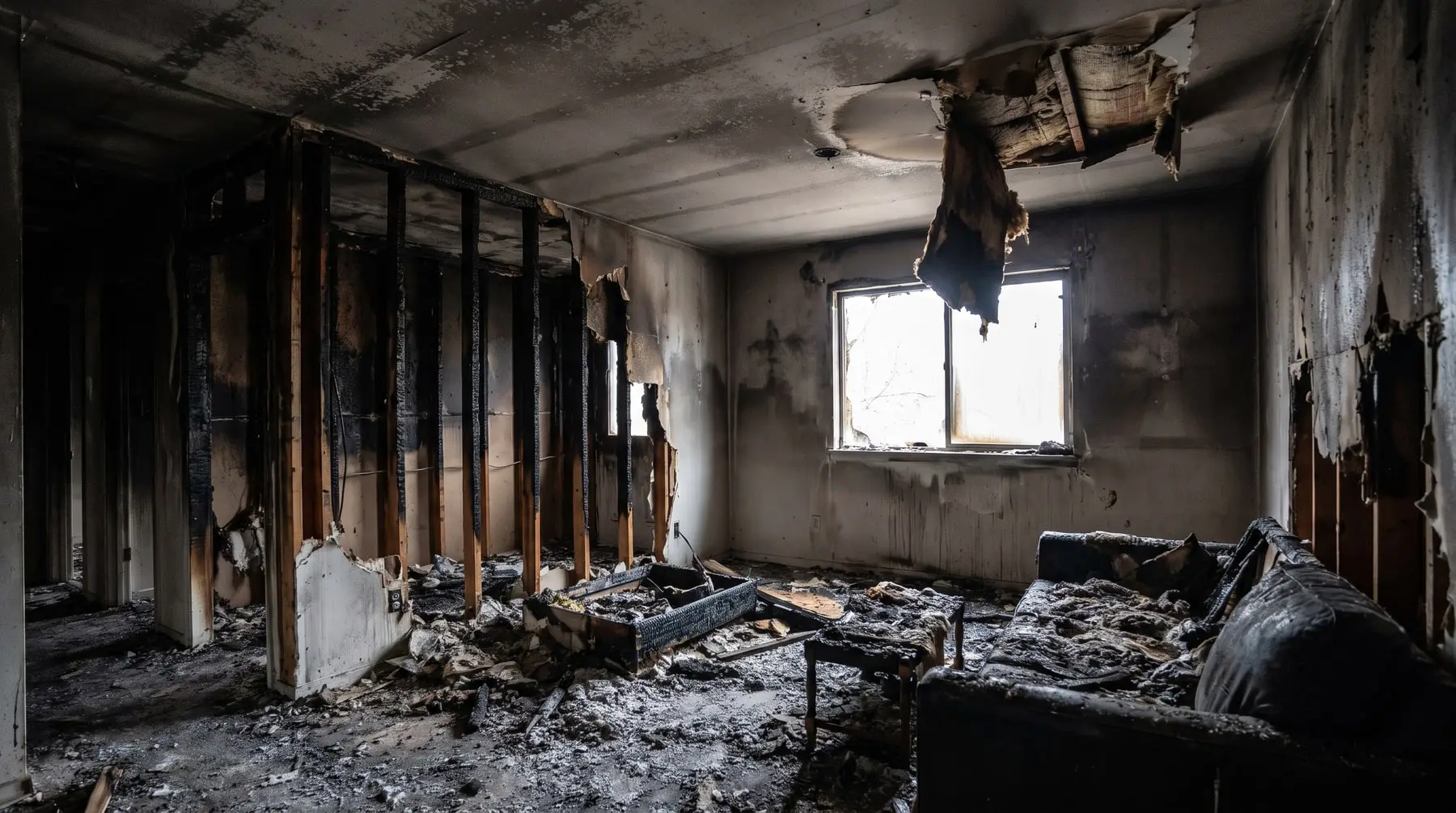
What fire damage restoration involves
Fire damage restoration addresses three separate types of damage that arrive together: fire and char damage to the structure, smoke and soot residue throughout the building, and water damage from firefighting. Soot is acidic and begins etching glass, corroding metal and permanently staining surfaces within days, so cleaning starts well before reconstruction. Smoke odor requires separate treatment because it penetrates porous materials and spreads through HVAC ductwork into rooms the fire never reached.
Soot damage compounds fast
Soot is acidic. Within hours it discolors plastics and finishes, within days it etches glass and corrodes metal, and after a few weeks much of that damage is permanent rather than cleanable. Water from firefighting is simultaneously soaking into the structure on its own 24 to 48 hour mold clock. A fire loss is the one situation where two deterioration processes run at once, which is why board-up and cleaning begin before the insurance claim is settled.
Signs to look for
- Visible char on framing, walls or roof structure
- Black or gray soot film on surfaces away from the fire
- Smoke odor that gets stronger when the HVAC runs
- Standing water and saturated materials from firefighting
- Discolored or yellowed plastics, paint and varnish
- Windows, mirrors or metal fixtures looking hazed or pitted
Need fire damage help in Lincoln?
The referral line is answered 24 hours a day, including weekends and holidays.
+1 (402) 783-8866Free referral · Licensed & insured contractors · Lincoln & Lancaster County
Fire Damage Restoration services
Pick what matches your situation, or call and describe it.
Smoke Damage & Odor Removal
Odor travels where the fire never reached. Masking it does nothing.
Read more →Soot Removal & Cleaning
Acidic residue that etches and corrodes. Wiping it makes it worse.
Read more →Emergency Board-Up & Tarping
Securing the building before weather, animals or trespassers get in.
Read more →What the process looks like
- 1
Emergency board-up
Openings are secured and the roof tarped so weather, animals and trespassers stay out.
- 2
Call the referral line
Answered 24 hours. Say whether the fire department has released the property.
- 3
Assessment
The contractor documents fire, smoke and water damage separately, which the claim requires.
- 4
Water extraction
Firefighting water is removed and drying begins immediately, on the same clock as any water loss.
- 5
Soot and residue removal
Surfaces are cleaned by method matched to the residue type. Wrong method sets the stain permanently.
- 6
Odor treatment
Thermal fogging, hydroxyl or ozone treatment, plus sealing where odor has penetrated framing.
- 7
Reconstruction
Unsalvageable structure, drywall, flooring and finishes are rebuilt.
Frequently asked questions
How much does fire damage restoration cost in Lincoln, NE?
Fire losses vary more widely than any other restoration work because three damage types combine. A contained kitchen fire with smoke through one floor is a different order of magnitude from a structure fire requiring partial rebuild. Cost drivers are the extent of structural loss, how far smoke and soot travelled through HVAC, and how much firefighting water soaked into the building. Get a written estimate, and expect your carrier to assign an adjuster for anything beyond a minor loss.
Can smoke odor be completely removed?
Usually yes, but only if the source is removed first. Odor lingers because soot particles remain in porous materials, inside wall cavities and in HVAC ductwork. Masking agents and air fresheners do nothing lasting. Genuine removal means cleaning or discarding the materials holding the residue, cleaning the duct system, treating with thermal fog or hydroxyl generators, and sealing framing where odor has penetrated the wood. Skipping the source removal is why smoke smell comes back in humid weather months later.
Why is there water damage after a fire?
Firefighting uses a great deal of water, and much of it ends up in the structure. That water follows the same rules as any other water loss: it soaks into drywall and subfloor, runs into wall cavities, and starts the 24 to 48 hour mold clock. This is why fire restoration includes extraction and structural drying, and why a fire-damaged building left unattended frequently develops a mold problem on top of the fire damage.
What are the different types of smoke residue?
Four types, each needing a different cleaning method. Dry smoke comes from fast, hot-burning fires and leaves a powdery residue that is comparatively easy to remove. Wet smoke comes from slow, smoldering low-heat fires and leaves a thick, sticky, strong-smelling film that smears if cleaned wrongly. Protein residue from kitchen fires is nearly invisible but carries an intense odor and discolors paint and varnish. Fuel oil soot, typically from a furnace puffback, is heavy and greasy. Using a wet cleaning method on dry soot, or the reverse, can drive the residue into the surface permanently.
Should I clean up soot myself before the contractor arrives?
No, and this is the most common way people make a fire loss worse. Soot smears, and wiping it with a damp cloth pushes acidic residue into porous surfaces where it sets permanently, turning a cleanable wall into one that must be replaced. Professionals use chemical dry sponges first, then method-specific wet cleaning. Also bear in mind soot contains carcinogens and irritants, so cleaning without respiratory protection is a genuine health risk.
Is my home safe to enter after a fire?
Not until the fire department releases it, and often not immediately after. Structural integrity may be compromised where framing has charred, electrical systems may be damaged, and air quality is frequently poor. Fires also release toxic combustion products that settle on surfaces. Wait for official clearance, and treat anything covered in soot as something not to touch without protection.
Fire Damage Restoration across Lincoln & Lancaster County
Contractors cover Downtown & Haymarket, Near South, Country Club, Havelock, University Place, College View, Belmont, Air Park and every other part of the city.
Other restoration services
Water damage right now?
The referral line is answered 24 hours a day, including weekends and holidays.
+1 (402) 783-8866Free referral · Licensed & insured contractors · Lincoln & Lancaster County